

What Document and Workflow Intelligence Looks Like Across the Mortgage Lifecycle
To understand why mortgage lenders are moving beyond automation, we have to look at how this shift transforms day-to-day work on the fulfillment floor. It turns silent, passive data files into live, proactive operational guideposts.
1. Document Intake: From “Collecting Files” to “Signal Detection”
In a traditional setup, document automation just means a portal accepts an upload and tries to read the words on the page using standard tools. If a borrower uploads a blank sheet or the wrong tax form, the system accepts it silently. The error sits hidden in the folder until a processor manually opens it days later.
With true intelligence, the intake layer instantly searches for signals. The second a tax document hits the system, the platform checks if all required pages are present, verifies that the signatures are in place, and confirms that the name matches the loan application. If a signal is missing, it alerts the team immediately, catching the error at the front door before it stalls the production timeline.
2. Processing: From “Data Entry” to “Anomaly Sorting”
Processors routinely spend hours retyping numbers from bank statements into calculation worksheets. If a traditional automation tool tries to do this, it often misreads handwritten notes or struggles with non-standard page layouts, leaving the processor to verify every single line anyway.
An intelligent infrastructure does not just scrape text; it reads the financial history like an analyst. It looks across 60 days of transaction history, automatically flags any un-disclosed large deposits that might jeopardize investor guidelines, and groups bank statements by account type. It isolates anomalies instantly, allowing processors to focus entirely on clearing conditions rather than hunting for typos.
3. Underwriting Support: From “Form Checking” to “Clear Pathing”
Underwriters are often treated like highly trained data checkers. They spend a massive chunk of their day cross-referencing information across multiple loan sections, checking if the income on a pay stub matches an amended tax return corporate schedule.
Intelligence infrastructure handles the heavy lifting of cross-validation across the whole file. It matches the data points across all uploaded assets, highlights specific risk exceptions, and presents the underwriter with a clean overview of the file’s health. The underwriter can skip the administrative scavenger hunt and jump straight into making risk decisions based on decision-ready data.
4. Closing and Post-Close: From “Last-Minute Panic” to “Complete Certainty”
The final stretch of a loan is frequently plagued by manual trailing document tracking and stressful post-close audits. Missing signatures or mismatched files discovered late in the game can delay investor delivery, damaging margins and relationship trust.
An intelligent operation continuously scans closing packages against investor parameters. It ensures that every asset file, disclosure form, and secondary document is perfectly stacked, cross-checked, and audit-ready before the loan is transferred, bringing peace of mind to leadership teams.
The Characteristics of Intelligent Mortgage Workflows
To help operational leaders evaluate their current technology choices, we developed a simple, proprietary evaluation framework. If you want to know whether a tool offers true operational intelligence or just basic, brittle automation, check it against ‘The 5Cs of Workflow Intelligence’.
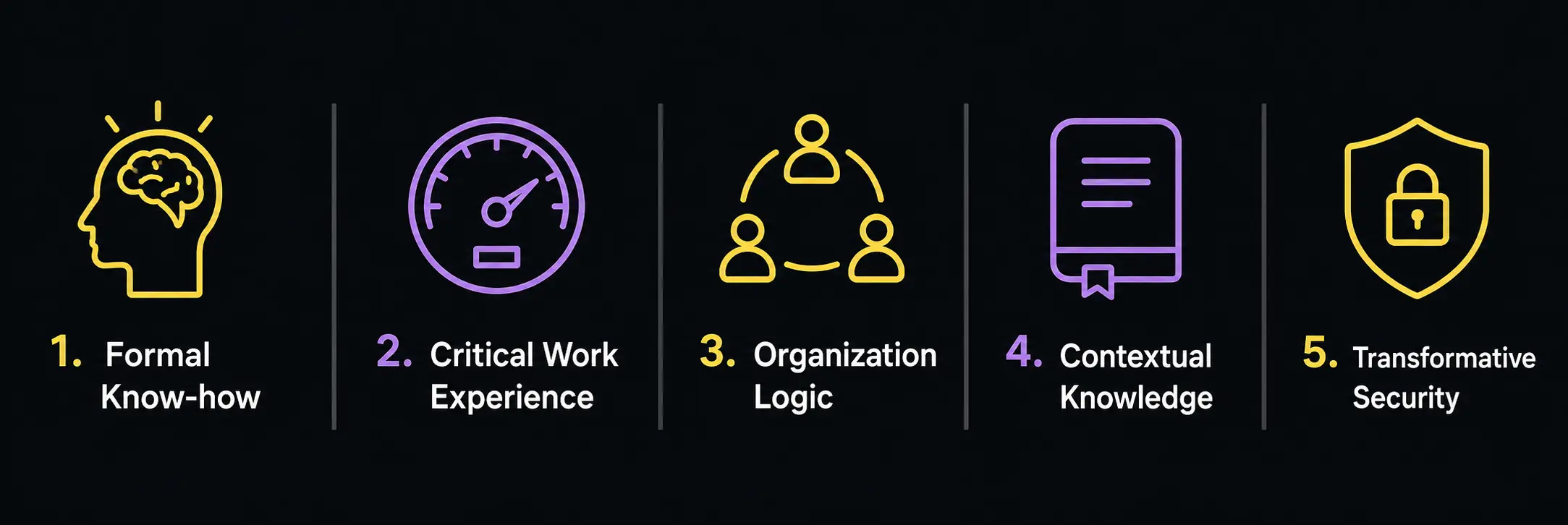
1. Context Awareness
Intelligent processes understand the deep relationships between distinct operational elements. They know that a change in the loan-to-value ratio on a closing disclosure changes the exact documentation requirements needed for a specific secondary investor path. They view your loan files as interconnected financial landscapes, not isolated document folders.
2. Confidence Scoring
Brittle systems treat every piece of extracted data the same, whether the scan was crystal clear or completely blurry. An intelligent platform evaluates its own work. It provides an explicit confidence readout for its data points. If a document scan is smudged, the system flags that exact line for human validation, keeping clean data moving forward without a hitch.
3. Coordination Logic
Instead of relying on rigid, linear pathways, intelligent mortgage workflows adjust dynamically. If an underwriting evaluation uncovers a complex corporate structure, the system adjusts downstream tasks on the fly—ordering specific entity documentation without waiting for a team member to manually reconfigure the workflow path.
4. Continuity of Knowledge
When your most experienced processor leaves your bank, their institutional knowledge often walks out the door with them. An intelligence layer embeds those complex business rules, past experiences, and operational nuances directly into the infrastructure software logic. This helps your team maintain high quality levels regardless of personnel updates or volume shifts.
5. Compliance Security
In a tightly regulated mortgage ecosystem, you cannot afford mysterious black-box software assumptions. Every single decision track, data point validation, and automated path choice must be completely transparent. True intelligence creates an immutable, clear digital trail for every file action, making internal quality control checks and external regulatory reviews effortless.
Why Mortgage Leaders are Investing in Intelligence Infrastructure
The push toward workflow intelligence isn’t a theoretical trend; it is a direct commercial response to the current economic environment. Independent mortgage banking operations are facing a convergence of real market challenges:
- Tech Stack Fatigue: Lenders are tired of buying standalone AI point solutions that solve one tiny problem but refuse to talk to the rest of their software suite. They want unified infrastructure that makes their entire existing investment loop function better.
- Operational Margin Traps: With market volatility and unpredictable loan volumes, maintaining a massive manual operations floor is an extreme financial risk. Lenders must find ways to handle volume scaling smoothly through exception-based processing without automatically adding variable headcount costs.
- Evolving Quality Controls: Regulatory oversight leaves zero room for structural errors. Relying on tired human eyes to catch hidden details across thousand-page loan files is a major operational risk.
Strategic mortgage leadership teams realize that survival isn’t about working harder or clicking faster. It is about choosing platforms that build long-term operational resilience directly into the business model.
How DocVu.AI Enables Workflow Intelligence
This is exactly why we built DocVu.AI. We do not view ourselves as an OCR platform, an isolated document processing widget, or another trendy AI point solution. DocVu.AI is built from the ground up to serve as the document and operational intelligence layer for modern mortgage operations.
Our platform delivers robust, platform-specific capabilities designed to handle the heavy lifting of document processing from start to finish:
- Automated Document Classification: Instantly identifies and categorizes hundreds of mortgage document types, ensuring files go exactly where they belong without manual sorting.
- Precision Data Extraction: Advanced AI models extract critical data points from complex, unstructured, or multi-page documents—including tax returns, pay stubs, and bank statements.
- Cross-Document Validation: Compares extracted data across the entire loan file to detect discrepancies, mismatches, or missing information early in the pipeline.
- Real-Time Confidence Scoring: Assigns an explicit confidence level to every extracted data point, seamlessly routing low-confidence text to human operators for quick verification while keeping clean data moving automatically.
- Audit-Ready Outputs: Generates completely transparent, immutable digital trails and formatted data packages, ensuring your files are instantly prepared for internal quality checks and external regulatory reviews.
Engineered to sit comfortably between your incoming data channels, your physical loan documentation, and your core system of record like Encompass or ICE Mortgage Technology, DocVu.AI reads, normalizes, and cross-checks data strings across your entire loan manufacturing pipeline.
We don’t expect you to change your workflows, abandon your core applications, or retrain your execution teams. DocVu.AI acts as the connective fabric that links your files, your business rules, and your loan decisions together. Whether you are running complex income calculations for non-traditional borrowers, validating massive asset histories, or preparing pristine packages for post-close review, DocVu.AI ensures your business operates with complete data clarity.
The Future of Mortgage Operations
The mortgage industry is entering a defining operational phase. As we look ahead, the competitive advantages of the past like offering slightly faster manual turn times or maintaining giant data entry support teams are rapidly losing their edge.
The future belongs to lenders who understand that data is only valuable when it is actionable. The ultimate winners in the modern lending landscape won’t necessarily be the ones who process files through a system the fastest.
They will be the lenders who achieve true operational velocity. By replacing manual touchpoints with intelligent orchestration, forward-thinking banks are securing faster processing timelines, slashing manual effort, and driving unmatched data accuracy.
If you are ready to move your organization past the constraints of basic, rigid automation and build a highly accurate, scaled lending operation that thrives in any market cycle, it is time to shift your focus.
Transform your mortgage operations with intelligent document processing, faster loan decisions, reduced manual effort, and greater operational confidence.