Introduction: Why Speed Matters in Loan Processing
In today’s hyper- competitive digital lending landscape, speed and accuracy define borrower experience. Customers now expect loan approvals in days, not weeks – while lenders juggle hundreds of documents per loan file, including income proofs, KYC forms, credit reports, property papers, and compliance checklists.
Yet, many institutions still rely on manual document organization and search, where employees scan through folders, misnamed files, and outdated indexing systems.These inefficiencies directly slow down approvals, increase operational risk, and hurt customer trust.
This is where automated document indexing powered by AI transforms mortgage operations, enabling lenders to locate, verify, and process documents faster than ever before.
What Is Automated Document Indexing?
Document indexing is the process of tagging and organizing files so they can be easily searched,retrieved and understood.
In traditional systems, this requires human operators to manually label each document type —making it slow, inconsistent, and error-prone.
Automated document indexing, powered by AI and Intelligent Document Processing (IDP) platforms like DocVu.AI, eliminates these limitations using:
- OCR (Optical Character Recognition)
- NLP (Natural Language Processing)
- Machine learning-based document understanding
It automatically:
- Detect document types (e.g., pay slips, tax forms, loan applications)
- Extract key data fields (e.g., borrower name, loan number, PAN, property ID)
- Assign metadata and index tags automatically
- Enable instant search and navigation across loan files
The result? A unified, searchable repository where documents can be located and verified in seconds.
The Problem with Manual Document Search in Mortgage Workflows
Before automation, mortgage teams face three major bottlenecks:
- Time-Consuming Retrieval:
Locating a single missing document can take hours — especially when file names or folder structures are inconsistent. - Human Error:
Misfiled or mislabeled documents often lead to compliance delays or rework. - Lack of Visibility:
Without indexed metadata, lenders can’t easily track the status of each file or identify missing items.
When multiplied across hundreds or thousands of loans, these inefficiencies significantly slow down approvals and increase operational costs.
How Automated Indexing Solves These Challenges
Platforms like DocVu.AI automate the indexing process end-to-end, turning unstructured data into actionable, searchable information.
1. AI-Based Document Classification
DocVu.AI intelligently identifies document types — even if they vary in format, layout, or structure.
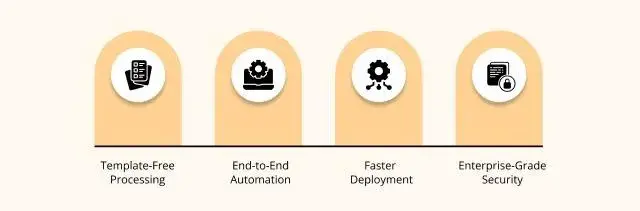
No predefined templates required. Whether it’s a scanned PDF, a handwritten form, or an image — the AI learns from context and classifies accordingly.
2. Metadata Tagging and Data Extraction
Each document is enriched with metadata — borrower details, document type, date, etc.
This metadata fuels powerful search capabilities, allowing users to find documents by keyword, ID, or even content fragments.
3. Smart Validation and Cross-Referencing
DocVu.AI validates indexed data against loan origination or CRM systems — ensuring accuracy and completeness before moving forward in the workflow.
4. Centralized Access and Navigation
With all indexed documents stored in a unified repository, lenders gain instant access and traceability across all cases — supporting faster audits and regulatory checks.
Real Impact: Faster Loan Processing and Happier Customers
Here’s what automated document indexing means for real-world lending teams: